The Man Who Bought a Castle - Alderton, Northamptonshire
Derek Batten bought a plot of land advertised as a castle and moat; but there is little sign of a castle other than a tree-covered mound surrounded by a huge ditch. So he has asked Time Team to sort it out. Because the site is a scheduled ancient monument, the team have to get permission from English Heritage for strictly limited excavations. To complicate matters further, Tony has to adjudicate on a long-running boundary dispute. The team is joined by castles expert Philip Dixon. Phil Harding gets kitted-out in chainmail as a Saxon footsoldier, facing a mounted Norman warrior on a Spanish stallion. The site is finally identified as a ringwork castle, built on a previous Saxon structure around the time of the Norman Conquest.
More from Season 8
Episode 1
An Anglo-Saxon Cemetery - Normanton, Lincolnshire
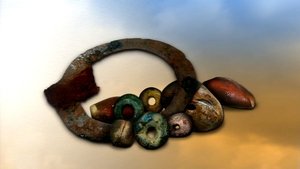
The team are intrigued that an Anglo-Saxon cemetery should contain Roman pottery. They are joined by archaeologist Naomi Field, Maggie Darling (Roman pottery expert), Martin Welch (Anglo-Saxon expert), Irit Narkis (archaeological conservator), and Kevin Leahy (Anglo-Saxon cemeteries expert).
Episode 3
The Celtic Spring - Llygadwy, Powys
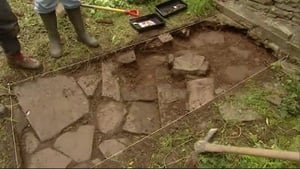
In deepest Wales lies an extraordinary site, with a Megalith, a Neolithic tomb, a Norman watchtower, early Christian symbols, and a natural spring. From this spring, the landowner has recovered an astonishing variety of coins, sculptures and jewelry. It is almost too good to be true, rather like an ancient theme park. So begins one of Time Team's most remarkable digs. Geophysics shows no structure anywhere on the site. The megalith is far too shallow to have stayed upright for thousands of years. And when the team unearth a sword, they start to get suspicious. They are joined by Celtic ritual expert Miranda Green, architectural historian Will Hughes, and Iron Age specialist Ian Stead. Results show that the site has been 'salted' and the finds have all been placed or build between the 19th century and as late as the 1980s. More info can be found at Llygadwy.
Episode 4
A Waltham Villa - Waltham Field, Whittington, Gloucestershire
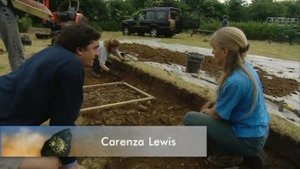
Time Team want to paint a picture of a family living in a Roman villa in the Cotswolds almost 2000 years ago. So they decide to dig a site near Fosse Way, only a few hundred metres from two previously excavated villas, in an area unusually dense with Roman remains. They are joined by Neil Holbrook, Roman specialist Richard Reece, and Finds specialist Alex Croom. Phil helps Peter Reynolds reconstruct a tribulum, a Roman threshing board. And the experts conclude that the villa was built very early after the Roman invasion, but abandoned – possibly for financial reasons – quite soon after.
Episode 5
The Lost Viaduct - Blaenavon, Torfaen
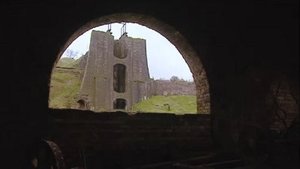
Time Team attempt to find what is reputed to be the first railway viaduct. Built in 1790, to move coal efficiently from the mine to the Blaenavon Ironworks, one mountain over, horses drew wagons along its tracks for only about 10 years. Spoil from local mines has not only covered the viaduct, but filled the valleys so completely that it is difficult to find any clues as to where to dig. Thousands of tons of earth are moved to find the top of the viaduct, 12 meters below the modern surface. It is too dangerous to enter, but a camera is lowered for a peek. Elsewhere on the site, the remains of a manager's house and workers' cottages are found. As experimental archaeology, a small blast furnace is set up within the disused ironworks, and a Time Team logo (wooden pattern carved by Victor Ambrus) and cart wheels are cast.
Episode 6
A Palace Sold for Scrap - Rycote, Thame, Oxfordshire
The owners of Rycote House live in a lovely converted stable block, but they believe that the extremely grand house that once stood on the property and which hosted Tudor royalty burned down in 1745, and they want Time Team to investigate. In the trenches, no evidence of burning is found, but it seems that grand houses were built and rebuilt on the site from the 14th century through the Georgian era. Finds include a drainage tunnel dating from Capability Brown's landscaping work on the property. Historian Robin Bush returns from the Bodelian Library with an extraordinary catalogue from 1807, which details the sale of the grand house room by room. In nearby Thane, a townhouse contains a fireplace and doorways that possibly come from the sale. Food Historian Ivan Day cooks and serves sweetmeats and hippocras. Palace expert Simon Thurley joins the Team.
Episode 7
An Iron-Age Roundhouse - Salisbury Plain, Wiltshire
The team are on Salisbury Plain, over 38,000 hectares of land in South West England owned by the MOD. Though the whole area is rich in ancient remains, they are concentrating on Beeches Barn, an unprepossessing field rumoured to conceal an Iron Age roundhouse. Alongside the dig, they are helping Ian Apter to build one of the team's most ambitious projects, a full-size thatched roundhouse. Early geophysics results indicate not one, but several banjo enclosures. Such features are always accompanied by Roman buildings. The aim is to get the site listed as an ancient monument, but time is running out. They are joined by army volunteers, and Iron Age expert Peter Reynolds. The many finds include a 2,000-year-old bone comb, a quern-stone and a Roman coin.